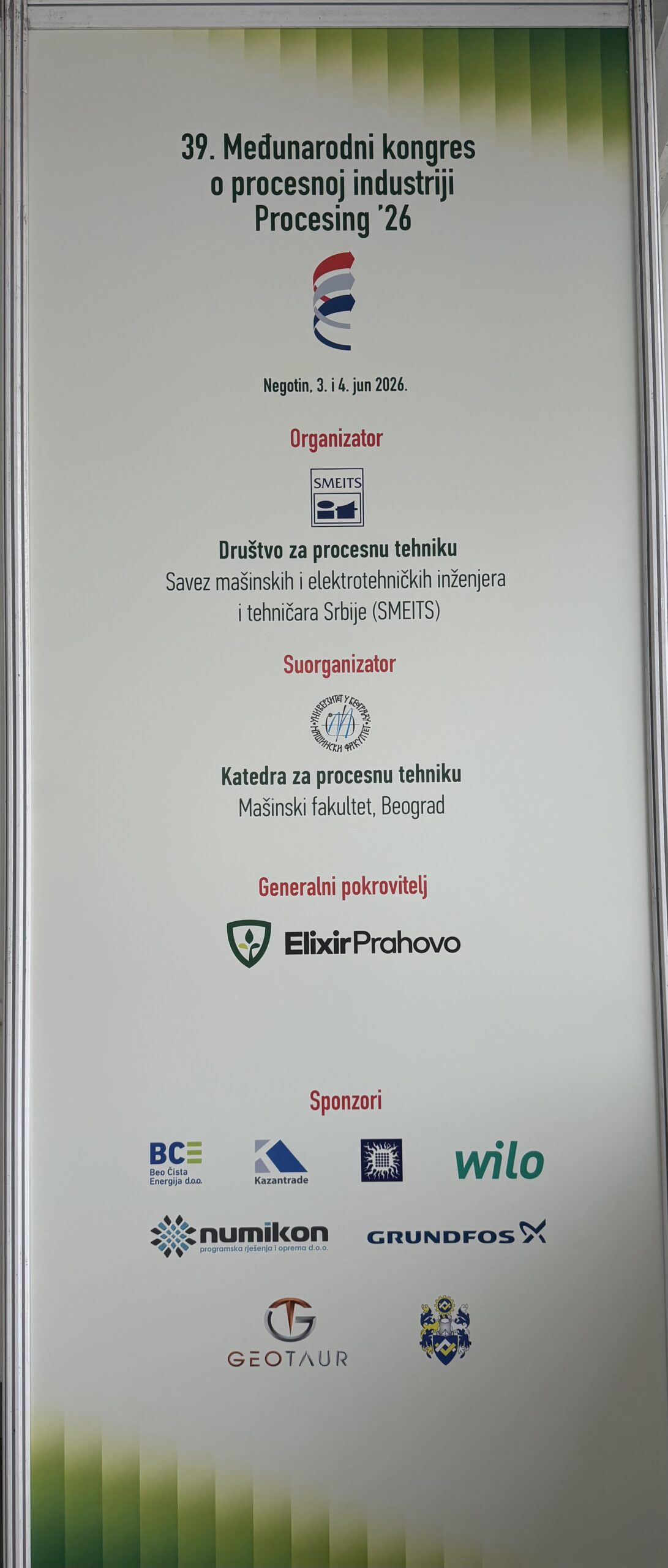
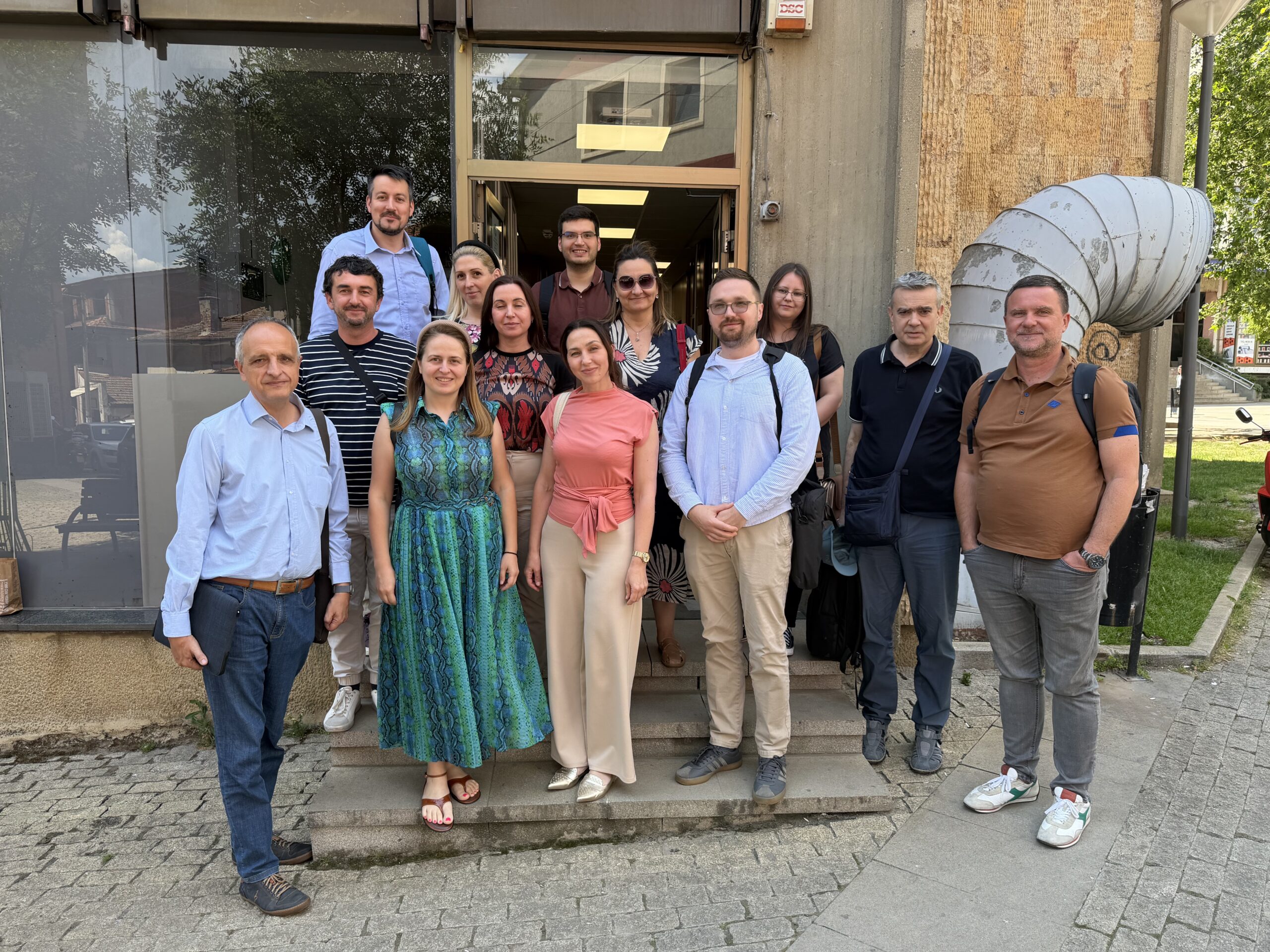
Prof. Aleksandar Madžarević and Asst. Prof. Miroslav Crnogorac had the opportunity to present the paper entitled Application of the New EU Air Quality Directive and Assessment of PM2.5 Exceedances in Serbia: Implications for Annual Pollution Classification, which partly represents research conducted within the FFGreEN project, at the 39th International Scientific and Professional Congress Procesing 2026, held in Negotin on 3 and 4 June 2026.
The 39th International Scientific and Professional Congress Procesing ’26 focused on the application of renewable energy sources and the reduction of negative environmental impacts in the process industry and households. Special attention was devoted to the application of the circular economy, the improvement of energy efficiency, the achievement of sustainable development goals, emission reduction, the introduction of renewable energy sources, and the production of sustainable products, i.e. closing the product–waste–product cycle. Particular emphasis was placed on the role of households in the green energy transition through more responsible energy consumption and the application of sustainable solutions.
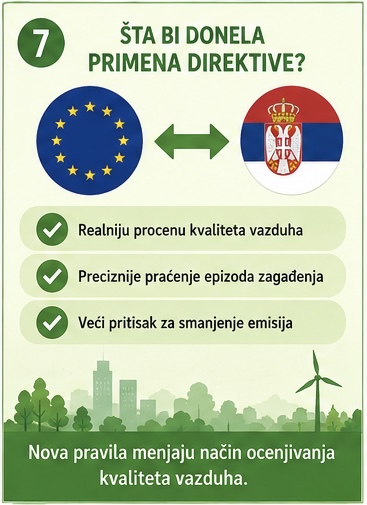
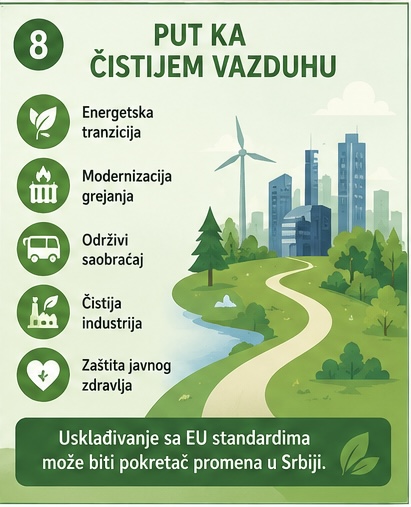
The research conducted by our team focused on analysing how the implementation of the new 2024 EU Air Quality Directive would affect the assessment of air quality in Serbia, with a particular focus on suspended PM2.5 particles. The specific significance of the research lies in the fact that the new directive introduces a daily PM2.5 limit value of 25 µg/m³ and permits a maximum of 18 exceedance days per year. The analysis of data for January 2026 showed that, in a large number of cities in Serbia, this annual limit had already been exceeded during the first month of the year. Through case studies of Negotin, Užice, Vranje, and Sombor, the paper demonstrates that the problem of pollution is not local in character, but is present across different regions of the country. The conclusion of the paper highlights the need to harmonise domestic regulations with European standards and to implement systemic measures in the energy, transport, and heating sectors in order to protect public health and improve air quality.